foreclosure defense

judicial vs non judicial foreclosure defense

Judicial vs. Non-Judicial Foreclosure: Key Differences

Judicial vs. Non-Judicial Foreclosure: Where and When Homeowners Can Challenge the Evidence The biggest difference between judicial and non-judicial foreclosure defense is not simply whether a judge is involved. It is when and how a homeowner gets the opportunity to challenge the evidence being used to take the home. In a judicial foreclosure, the party …

Judicial vs. Non-Judicial Foreclosure: Key Differences Read More »

Foreclosure Defense for Homeowners Nationwide

Foreclosure Procedure: Notices, Deadlines & Defenses

Foreclosure can sometimes be challenged because the party seeking to foreclose failed to follow a procedure required by law. Even when a mortgage debt exists and a party has the legal authority to enforce it, the foreclosure process must still comply with applicable notice requirements, deadlines, and other legal rules. For homeowners concerned about foreclosure …

Foreclosure Procedure: Notices, Deadlines & Defenses Read More »

Foreclosure Defense for Homeowners Nationwide

Statute of Limitations in Foreclosure Cases: When the Bank’s Time Runs Out

Statute of Limitations in Foreclosure Cases: When the Bank’s Time Runs Out How long does a bank have to foreclose on your home? The answer depends on your state’s statute of limitations, the mortgage documents, and when the legal clock began running. A lender generally has a limited period to enforce a foreclosure claim. If …

Statute of Limitations in Foreclosure Cases: When the Bank’s Time Runs Out Read More »

Notice of Default: What It Really Means — and What To Do Next

Notice of Default: What It Really Means and What to Do Next A notice of default is a formal written notice from a mortgage lender, servicer, or authorized trustee stating that the borrower has missed payments or violated loan terms and that foreclosure may follow unless the default is corrected. It is a warning, not …

Notice of Default: What It Really Means — and What To Do Next Read More »

Why Many Foreclosure Cases get dismissed

Why can some homeowners get the cases against them dismissed? Foreclosure cases are treated like it’s automatic by the pretend lender. File papers, get judgment, sell house. That’s the script. But when a homeowner (or their lawyer) forces the plaintiff to prove the case with real evidence, many foreclosures fall apart. This isn’t theory. It’s …

Why Many Foreclosure Cases get dismissed Read More »

Are Judges Biased in Foreclosure Cases? How to Protect Yourself

The reality of Judicial bias in the courts Judges display a tremendous amount of court bias against homeowners in foreclosure cases. Especially when they are representing themselves. They often trust banks more than homeowners. That doesn’t mean you can’t win. Strategies to Overcome Judicial Bias in the courts – Stick to facts, not emotion. – …

Are Judges Biased in Foreclosure Cases? How to Protect Yourself Read More »

Another Quiet Title Victory Against U.S. Bank as Trustee for LSF9

We are proud to report another win for one of our clients. A homeowner who refused to accept a paper claim from a Wall Street trust that could not prove its rights. This case was filed in the Circuit Court of the State of Oregon for the County of Linn, Case No. 25CV60677. Our client …

Another Quiet Title Victory Against U.S. Bank as Trustee for LSF9 Read More »

false documents foreclosure

False Foreclosure Documents: What Homeowners Should Know

False Documents in Foreclosure: How Homeowners Can Spot Evidence That Deserves Investigation Imagine opening a foreclosure complaint and finding a document that simply does not make sense. Perhaps the mortgage assignment was signed years after the transaction supposedly occurred. Perhaps the same individual appears to have signed documents for several different companies. Perhaps a sworn …

False Foreclosure Documents: What Homeowners Should Know Read More »

North Carolina foreclosure victory following a challenge to a purported mortgage note allonge and the signer's authority

North Carolina Livinglies Foreclosure Victory

Questionable Allonge Helps Stop Foreclosure Sale Another foreclosure victory for a homeowner working with LivingLies and one of our network attorneys. This time, the case turned on a document the foreclosing party relied upon to establish its right to enforce the mortgage note. In a recent North Carolina case, our LivingLies legal and research team …

North Carolina Livinglies Foreclosure Victory Read More »

What doe a mortgage assignment prove?

Mortgage Assignment in Foreclosure: What Does It Prove?

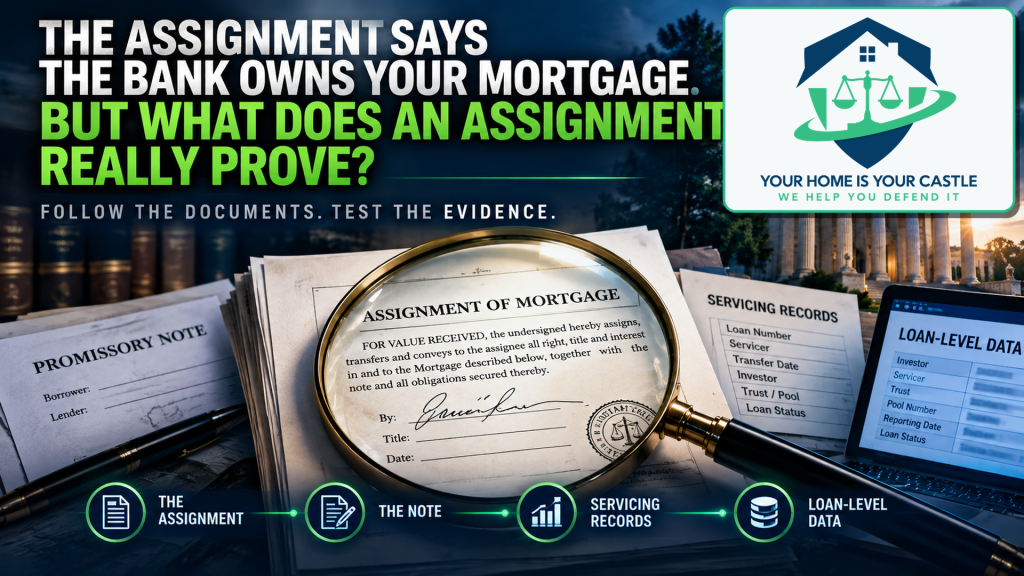
But What Does an Assignment Really Prove? You receive foreclosure papers. The bank says it has the legal right to foreclose on your home. Among the documents is something called an Assignment of Mortgage. It looks official. It has signatures, dates, perhaps a notary seal, and a recording number from the county clerk. The document …

Mortgage Assignment in Foreclosure: What Does It Prove? Read More »

DOES THE FORECLOSING PARTY HAVE LEGAL STANDING?

Does the Foreclosing Party Have Legal Standing?

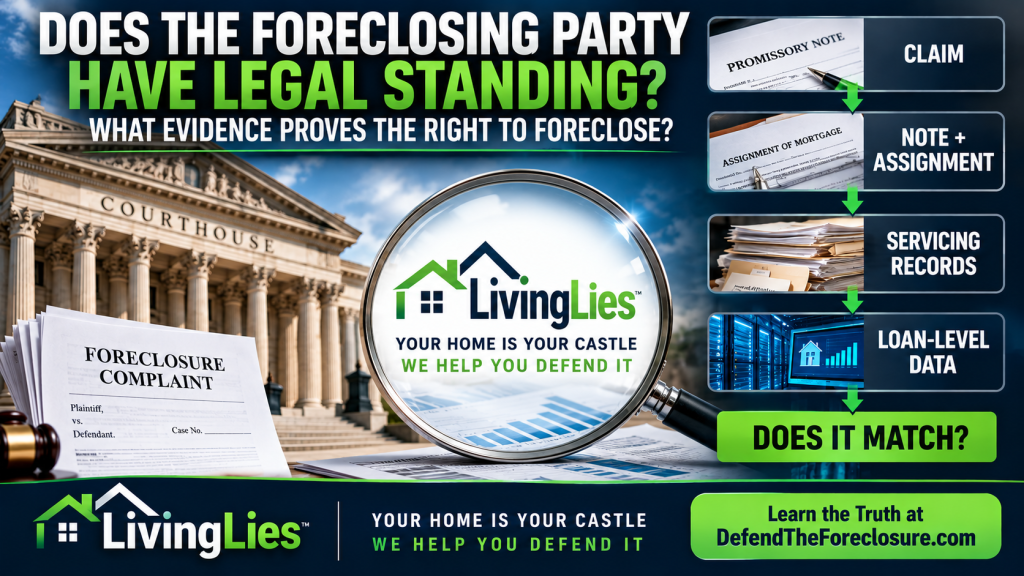
Foreclosure Defense using  lack of Legal Standing You received a foreclosure complaint or notice. A bank’s name appears at the top. A mortgage servicer says you are in default. A law firm says your home may be sold. That tells you something very important: Someone is claiming the right to foreclose. But it does not …

Does the Foreclosing Party Have Legal Standing? Read More »

documents needed for foreclosure defense

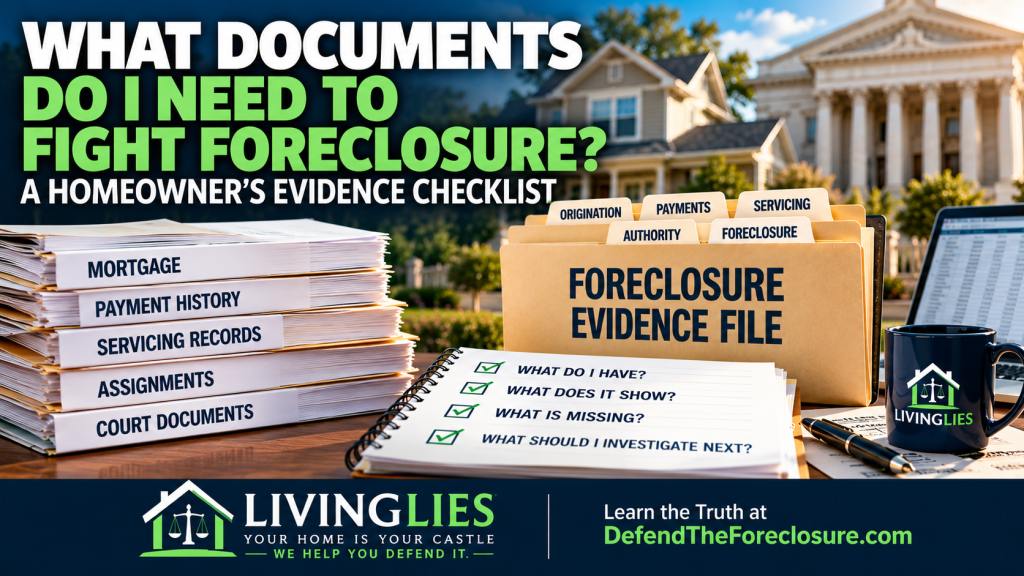
What Documents Do I Need to Fight Foreclosure?

A Homeowner’s Evidence Checklist If you have received a foreclosure notice, one of the first things you may do is start gathering paperwork. That is a good idea. But then something happens. You find the original mortgage. You find years of mortgage statements. You find letters from three different servicers. You find an assignment recorded …

What Documents Do I Need to Fight Foreclosure? Read More »

Foreclosure defense pro se

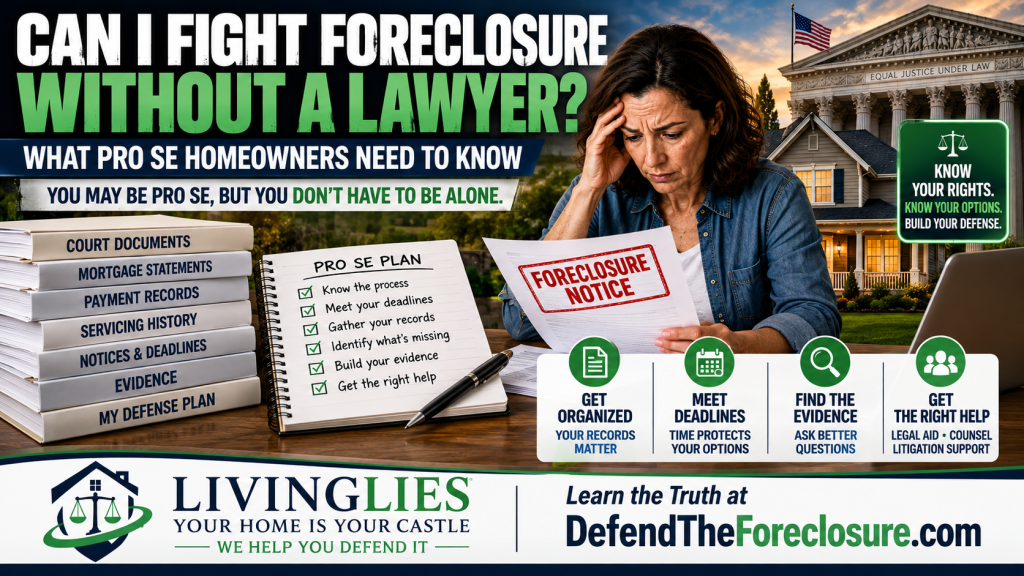
Can I Fight Foreclosure Without a Lawyer?

What Pro Se Homeowners Need to Know If you are facing foreclosure and cannot afford a lawyer, you are probably asking a frightening question: Can I fight foreclosure without a lawyer? The short answer is that homeowners do represent themselves in foreclosure cases. But that answer can be dangerously misleading unless you understand what representing …

Can I Fight Foreclosure Without a Lawyer? Read More »

stop foreclosure

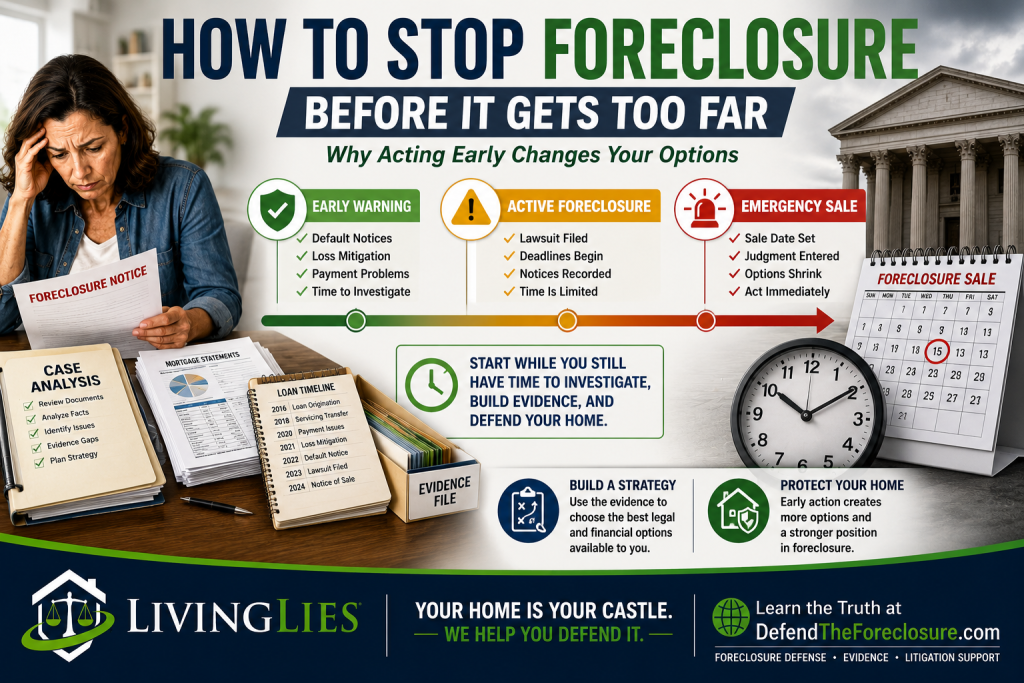
How to Stop Foreclosure Before It Gets Too Far

Why Acting Early Changes Your Options If you are searching the Internet for how to stop foreclosure, there is something you need to understand before anything else: When you act can be almost as important as what you do. Homeowners often think of foreclosure as one event. It isn’t. Foreclosure is a process. And during …

How to Stop Foreclosure Before It Gets Too Far Read More »

learn what mortgage boarding is

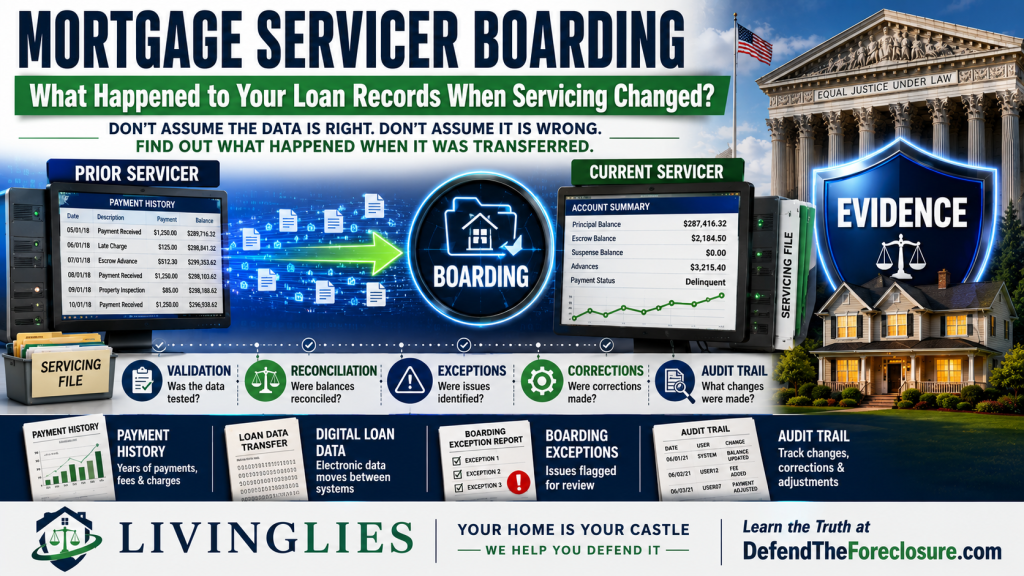
Mortgage Servicer Boarding Records

Can a New Servicer Really Prove Old Servicer’s Records? Your mortgage servicing gets transferred. A new company begins sending statements. Years later, that company—or perhaps another company after it—appears in court with a payment history covering periods when it was not even servicing your loan. Its witness testifies about the account. The witness may tell …

Mortgage Servicer Boarding Records Read More »

Business Records in Foreclosure

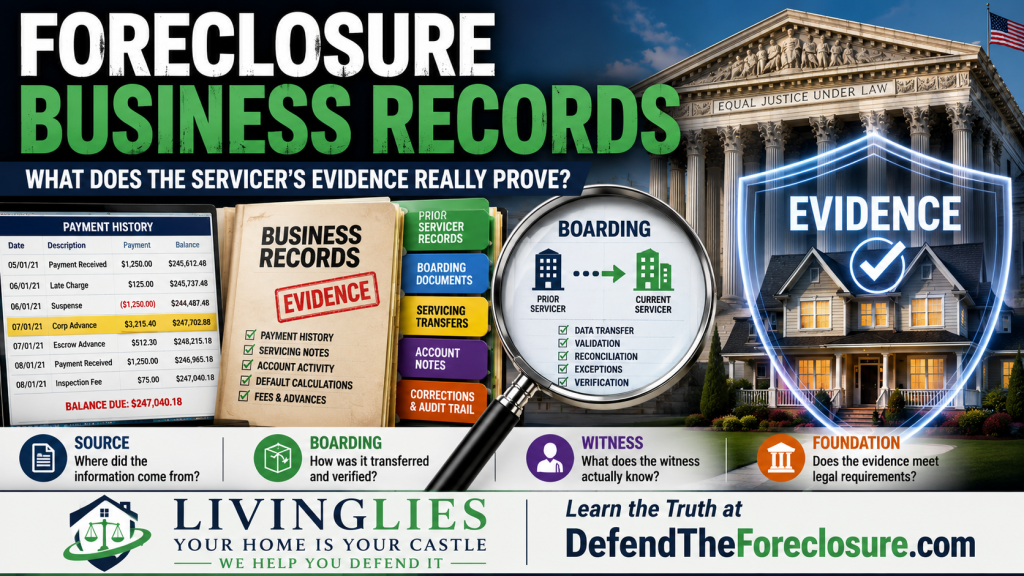
The Foreclosure Business Records Trap

How Servicers Try to Get Computer Records Into Evidence There is a moment in many foreclosure trials that homeowners and even some lawyers fail to recognize as one of the most important moments in the entire case. The introduction of Foreclosure Business records. The foreclosure lawyer hands a stack of documents to a witness. The …

The Foreclosure Business Records Trap Read More »

real creditor foreclosure defense

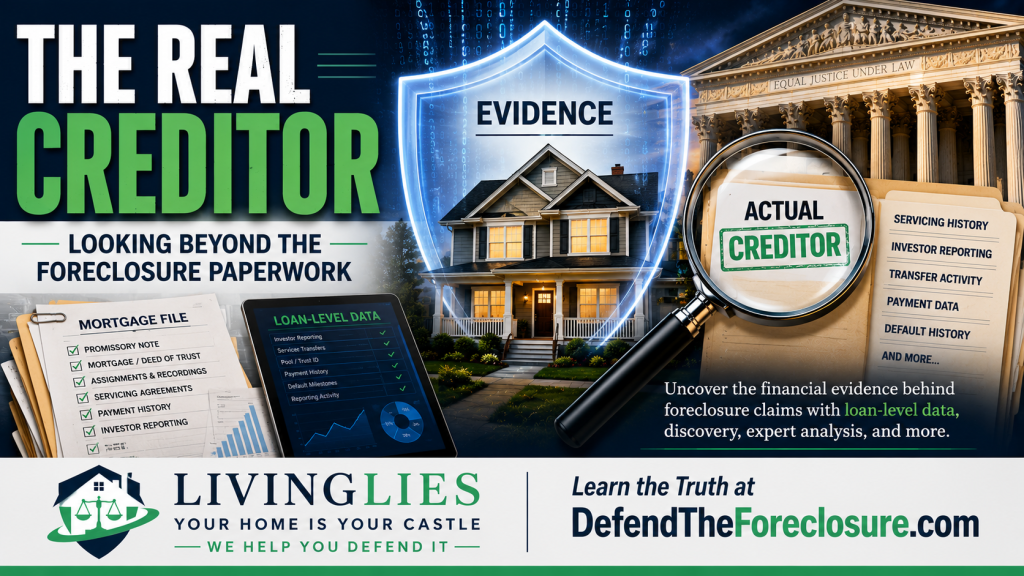
The Foreclosing Party Is Not the Real Creditor

How to prove it by building an evidence based defense One of the first questions many homeowners should ask after receiving a foreclosure complaint is surprisingly simple: “Is the company suing me actually the company that owns my loan?” It is an important question. That’s why making them prove they are the real creditor is …

The Foreclosing Party Is Not the Real Creditor Read More »

who owns your mortgage?

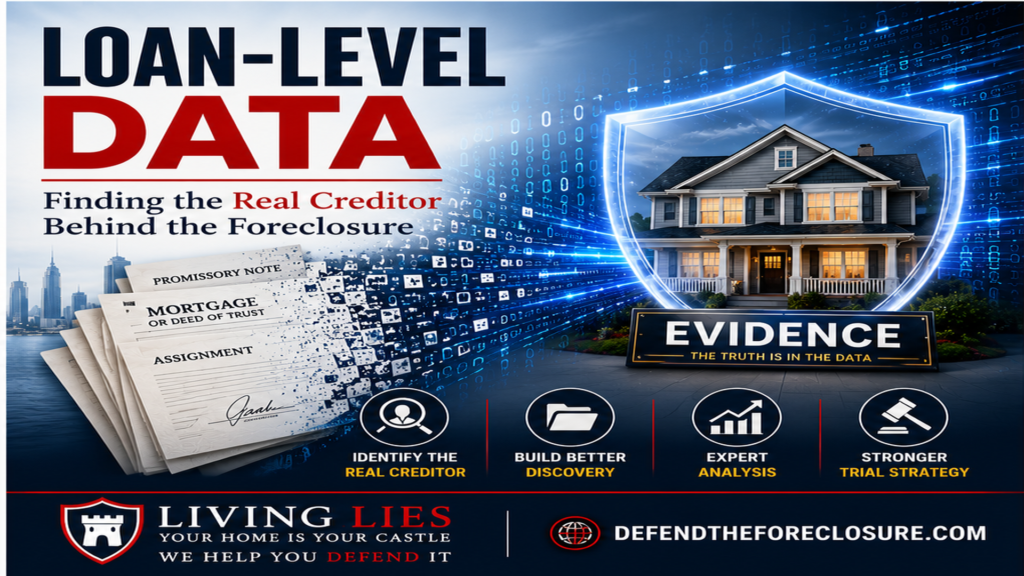
How Loan-Level Data Can Stop a Foreclosure

Discovering the Real Creditor Before You Lose Your Home Here’s how loan level data in foreclosure defense can stop a sale; read on. For years, foreclosure litigation has focused on documents that appear in the public record. The promissory note. The mortgage or deed of trust. Recorded assignments. Affidavits signed by loan servicers. Declarations stating …

How Loan-Level Data Can Stop a Foreclosure Read More »

Nationwide Foreclosure Defense

Emergency Motions to Stop a Foreclosure Sale

A Homeowner’s Guide to Immediate Court Relief Few events create more fear than receiving notice that your home will soon be sold at foreclosure. For many homeowners, the first reaction is panic. Phone calls are made. Modification applications are rushed to the servicer. Internet searches begin late into the night looking for one simple answer: …

Emergency Motions to Stop a Foreclosure Sale Read More »

Defend the Foreclosure

Preliminary Injunction in Foreclosure Cases

How to stop a Foreclosure sale For many homeowners, obtaining a Temporary Restraining Order (TRO) feels like crossing the finish line. The foreclosure sale has been stopped. The immediate crisis has passed. Everyone can finally breathe. Unfortunately, that is usually only the beginning. A TRO is designed to preserve the status quo for a very …

Preliminary Injunction in Foreclosure Cases Read More »

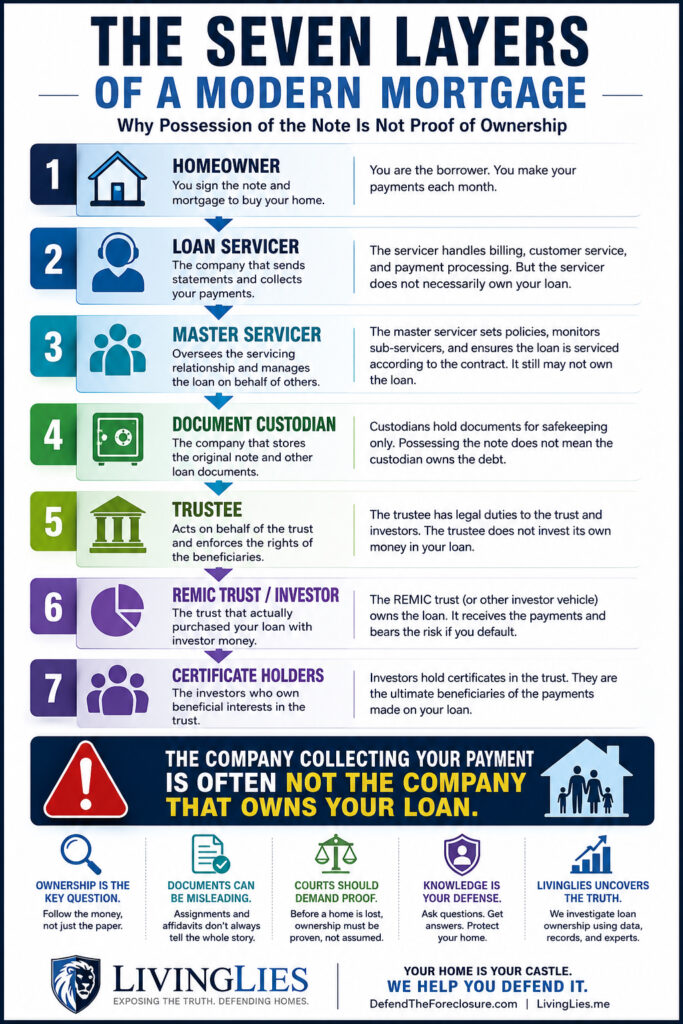
Possession of the note is not proof of ownership

Possession of the Note Is Not Proof of Ownership

By Lance Denha esq. and Donna Steenkamp For more than twenty years, we have been saying possession of the note is not proof of ownership. This is something that many courts are only beginning to recognize. The foreclosure industry has successfully convinced courts to ask the wrong question. Instead of asking: “Who actually owns the …

Possession of the Note Is Not Proof of Ownership Read More »

Scroll to Top